How to Wash Cashmere (Without Ruining It)

Cashmere is one of the most misunderstood fabrics in your closet. Most people either avoid washing it entirely or send it to the dry cleaner every time, both of which are mistakes. The truth is that washing cashmere at home is not only safe, it actually makes the fibers softer over time.
The key is understanding what cashmere is and what it needs. Cashmere comes from the fine undercoat of cashmere goats. Those fibers are significantly thinner than sheep’s wool, which is why cashmere feels so much softer. But that fineness also means the fibers are more vulnerable to heat, agitation, and harsh chemicals. Treat them gently and they’ll last for decades. Treat them like regular laundry and you’ll end up with a felted, shrunken version of what used to be your favorite sweater.
This guide covers everything: hand washing (the gold standard), machine washing (when it works), drying, storage, depilling, and how to fix the most common mistakes.
Hand Washing: The Best Method
Hand washing gives you complete control over temperature, agitation, and contact time. It takes about 15 minutes of active effort and is the safest approach for any cashmere garment.
What You Need
• A clean basin, sink, or large bowl
• Cool water, around 20–25°C (68–77°F). Think room temperature, not cold from the tap in winter and not warm.
• A pH-neutral wool or cashmere wash. The Laundress Wool & Cashmere Shampoo, Eucalan, and Woolite Delicates all work well. In a pinch, a small amount of baby shampoo will do.
• A clean, dry white towel (colored towels can transfer dye to wet cashmere)
• A flat drying surface or mesh drying rack
Step by Step
1. Check the care label. If it says “dry clean only,” take it to the dry cleaner. If it says “hand wash” or shows the hand wash symbol, proceed.
2. Fill your basin with cool water and add a small amount of detergent, roughly a teaspoon for a single garment. Mix it in before adding the cashmere.
3. Turn the garment inside out. This protects the outer surface from any friction during washing.
4. Submerge the garment and gently press it through the water. Do not wring, twist, scrub, or agitate vigorously. Think of it as gently pressing the soapy water through the fibers. Let it soak for 10 to 15 minutes.
5. Drain the basin and refill with clean cool water. Press the garment gently to rinse. Repeat until the water runs clear and there’s no soap residue.
6. Lift the garment out with both hands, supporting its full weight. Never pick it up by one end while it’s wet, as the weight of the water will stretch the fibers.
Machine Washing: When and How
Machine washing cashmere is possible, but only under specific conditions. If your care label explicitly permits machine washing, or if you’re working with a sturdier cashmere knit (not a lightweight gauge), you can use a machine.
The Rules
• Always use a mesh laundry bag. This is non-negotiable. The bag prevents the cashmere from catching on the drum or tangling with other items.
• Select the delicate or wool cycle. If your machine has a hand wash setting, even better.
• Use cold water only. Never warm, never hot.
• Skip the spin cycle entirely if possible, or set it to the lowest speed available. High-speed spinning distorts cashmere fibers.
• Wash cashmere separately from heavier fabrics. Denim, towels, and anything with zippers or buttons can damage the fibers through friction.
• Use the same pH-neutral detergent you’d use for hand washing. Standard laundry detergent is too harsh. Never use fabric softener, as it coats the fibers and degrades softness over time.
Drying: This Is Where Most People Go Wrong
Drying is the step that makes or breaks cashmere care. Two rules govern everything: never use a dryer, and never hang cashmere to dry.
A tumble dryer, even on low heat, will felt and shrink cashmere. Hanging a wet cashmere garment stretches it under the weight of the water, and you’ll end up with a misshapen silhouette that’s very difficult to fix.
The Towel Roll Method
7. Lay a clean, dry white towel flat on a surface.
8. Place the wet cashmere flat on the towel and gently reshape it to its original dimensions. Smooth out any wrinkles or folds.
9. Starting from one end, roll the towel and garment together like a Swiss roll. Press gently as you roll to absorb excess water. Do not wring.
10. Unroll, then transfer the garment to a second dry towel or a flat mesh drying rack.
11. Reshape again if needed and leave to air dry. Keep it away from direct sunlight and heat sources. Flip it over after a few hours so both sides dry evenly.
Drying time varies depending on the thickness of the knit and your environment, but expect 12 to 24 hours for full drying. Patience here protects everything you did right in the washing step.
How Often to Wash Cashmere
Less than you think. Cashmere has natural antibacterial properties and doesn’t trap odors the way synthetic fabrics do. Washing after every 5 to 10 wears is a good rule of thumb, or whenever the garment is visibly soiled or has absorbed strong odors.
Between washes, air your cashmere out after wearing it. Don’t fold it and put it straight back in the drawer. Let it breathe on a flat surface for a few hours to release any moisture from your body before storing it.
Over-washing weakens the fibers and accelerates pilling. Under-washing isn’t really a concern unless you’re dealing with stains.
Dealing with Pilling
Pilling is not a sign of low-quality cashmere. All cashmere pills to some degree, especially in the first few wears. It happens when shorter fibers work their way to the surface through friction at contact points like underarms, where a bag strap sits, or along the sides of the body.
The best tool for managing pills is a cashmere comb or a quality fabric shaver. A cashmere comb (sometimes called a pilling comb) works by gently lifting pills from the surface without cutting into the fabric. A fabric shaver uses a rotating blade behind a protective screen to trim pills cleanly. Both work well. The comb is gentler and better for fine-gauge cashmere. The shaver is faster for thicker knits with heavier pilling.
Never pull pills off by hand. You’ll pull the underlying fibers with them and create thin spots in the fabric.
Storage
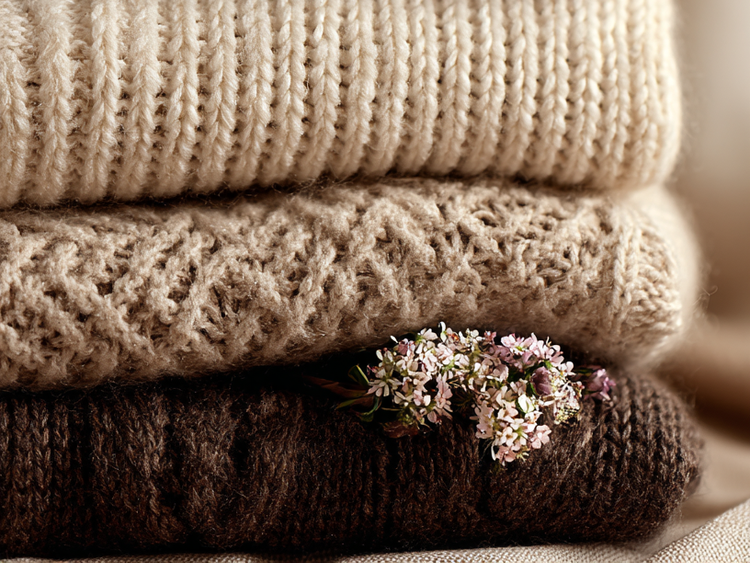
Always store cashmere folded, never on a hanger. Hangers create shoulder bumps and stretch the garment under its own weight over time. Fold along the natural seams and stack neatly in a drawer or on a shelf.
For seasonal storage, wash the garment before putting it away. Moths are attracted to the oils, skin cells, and food particles on worn clothing, not to clean fibers. Store in a breathable garment bag or a sealed container with cedar blocks or lavender sachets. Avoid plastic bags, which trap moisture and can cause yellowing.
Keep cashmere in a cool, dry, dark place. Sunlight fades colors over time, and warm, undisturbed corners are exactly where moths prefer to breed. Check your stored cashmere monthly during off-season for any signs of moth activity: small holes, tiny eggs, or larvae.
Stain Treatment
Act quickly. The sooner you treat a stain on cashmere, the better your chances of removing it completely.
For most stains, gently blot (never rub) the area with a clean, damp cloth. Then apply a tiny amount of your wool-safe detergent directly to the stain and work it in with your fingertips using a gentle pressing motion. Let it sit for a few minutes before proceeding with your normal hand wash.
Quick Stain Reference
Stain Type | Treatment |
Red wine, tea, coffee | Blot immediately. Dab with a cloth dipped in cool water and a drop of dish soap. Avoid regular detergent, which can set wine stains. |
Grease or oil | Blot excess. Apply a tiny amount of dish soap directly to the stain. Let sit 5 minutes, then hand wash as normal. |
Makeup (foundation, lipstick) | Blot the surface. Pre-treat by gently working cashmere shampoo into the stain before soaking. |
Chocolate | Let it dry first, then gently scrape off the solid residue. Dab with a cloth dipped in cool water and a drop of wool-safe detergent. |
General food stains | Let dry, brush off solids with a soft brush, then spot treat with detergent before washing. |
For any stain you’re unsure about, test your treatment on an inconspicuous area first, like an inside seam. If you see color bleeding or fiber damage, stop and take the garment to a professional.
What Not to Do
A short list of things that will damage cashmere, compiled from the most common mistakes:
• Hot water. Anything above 30°C (86°F) risks shrinkage and felting. The fibers compress and tangle irreversibly.
• Standard laundry detergent. These contain enzymes and alkaline agents designed for cotton and synthetics. On cashmere, they strip the natural oils that keep the fibers soft.
• Fabric softener. It coats the fibers, reducing softness over time and leaving residue that attracts dirt.
• Bleach of any kind. This will destroy the fibers.
• Wringing or twisting. This stretches and distorts the knit structure.
• Tumble drying. Even on low heat, the combination of heat and mechanical agitation will felt the fabric.
• Hanging to dry. The weight of the water pulls the garment out of shape, especially at the shoulders and hemline.
• Direct sunlight while drying. Can fade colors and weaken fibers.
How to Fix Common Mistakes
Shrinkage
If your cashmere has shrunk, it’s sometimes possible to relax the fibers back to their original dimensions. Fill a basin with cool water and add a generous amount of hair conditioner (about two tablespoons). Submerge the garment and let it soak for 30 minutes. The conditioner lubricates the fibers and allows them to be gently stretched. Remove the garment, press out excess water with a towel, then lay it flat and very gently stretch it back toward its original shape. Pin the edges in place if needed and let it dry completely. This doesn’t always work perfectly, but it can recover a meaningful amount of size.
Stretching
If cashmere has stretched out of shape (common from hanging or from wearing without washing for too long), a gentle hand wash followed by proper flat drying usually restores the original shape. The water relaxes the fibers, and flat drying lets them settle back into the knit structure without gravity pulling them in any one direction.
Stiffness After Washing
If your cashmere feels stiff or crunchy after washing, you probably used too much detergent. Rinse the garment again in clean cool water until all soap residue is gone. You can add a single drop of white vinegar to the rinse water, which helps restore softness without leaving any scent once the garment dries.
The Bottom Line
Cashmere care is simple once you understand the principles: cool water, gentle detergent, minimal agitation, and flat drying. That’s really it. The fabric rewards attention. A well-cared-for cashmere sweater gets softer with every wash, and there’s no reason a quality piece can’t last 10, 15, even 20 years in your wardrobe.
The biggest mistake most people make isn’t a technique error. It’s avoidance. They’re so afraid of damaging their cashmere that they never wash it at all, or they outsource every wash to the dry cleaner. Dry cleaning chemicals can actually dehydrate cashmere fibers over time, making them feel less soft. Home washing, done correctly, is better for the garment and better for your wallet.
Treat your cashmere like what it is: a natural fiber that thrives with moisture, care, and a little patience.
Like these stories? You will (probably) love our monthly newsletter.
Member discussion