How to Care for a Cashmere Coat

A cashmere coat occupies a unique position in your wardrobe. It combines the softness and luxury of cashmere with the structural demands of outerwear. It needs to be warm, hold its shape, resist the elements, and still feel like cashmere when you put it on. Caring for it requires balancing the needs of a delicate fiber with the realities of a garment that goes outside every day.
The investment in a cashmere coat is significant, whether it cost $500 or $5,000. The care principles are the same for both. Done well, a cashmere coat lasts 15 to 20 years and looks better with age.
Daily Wear and Handling
Hanging
Always hang a cashmere coat on a wide, padded or contoured wooden hanger. The hanger should support the full width of the shoulders without the ends poking past the shoulder seam. Wire hangers and thin plastic hangers create pressure points that distort the shoulder line and eventually leave permanent dents in the cashmere.
Button or close the coat while hanging. This helps it maintain its front drape and prevents the lapels from curling.
Rest Between Wears
If you wear your cashmere coat daily, give it at least one day off between wears. Cashmere fibers need time to recover their loft and release absorbed moisture. If you wear a coat every day without rest, the fibers compress permanently in high-stress areas and the coat loses its volume.
Avoid Friction
Cashmere pills quickly where it rubs against other surfaces. The most common friction points on a coat are the sides (from bags and arms), the collar (from scarves), and the lower back (from car seats). You cannot eliminate all friction, but awareness helps. Switch your bag to the opposite shoulder occasionally, and choose smooth scarves rather than rough knits when wearing them against cashmere.
Cleaning
A cashmere coat should be professionally cleaned, not home-washed. Unlike a cashmere sweater, a coat has structure, lining, interfacing, and construction that can be damaged by submersion in water and the manipulation of hand washing.
How Often
Once or twice per season is typical. At the end of winter, have the coat cleaned before storage. If the coat gets visibly dirty or develops an odor mid-season, clean it then as well. Do not clean after every few wears. Overcleaning breaks down cashmere fibers.
Dry Cleaning vs. Wet Cleaning
Professional wet cleaning is preferable for cashmere coats when available. Wet cleaning uses water with precisely controlled temperature and agitation, which is gentler on cashmere fibers than the chemical solvents used in dry cleaning. Perc, the standard dry cleaning solvent, can strip cashmere’s natural oils and leave the fiber feeling dry and brittle over time.
If your cleaner does not offer wet cleaning, dry cleaning is still acceptable. It is better to dry clean a cashmere coat than to not clean it at all. Just know that over many years of repeated dry cleaning, the fiber may lose some of its softness.
Spot Cleaning Between Professional Cleanings
For minor stains and marks, spot clean at home rather than taking the coat for a full cleaning. Dampen a clean, white cloth with cold water and blot the stain gently. For food or drink stains, add a tiny drop of mild detergent to the damp cloth. Work from the outside of the stain inward. Blot dry with a clean cloth and let the area air dry completely.
Never rub a cashmere coat aggressively. Rubbing causes pilling and can distort the surface texture.
Pilling Management
Cashmere coats pill. This is not a defect. Cashmere fibers are fine and short, which is what makes them soft, and those same properties make them prone to pilling. Higher quality cashmere (longer fibers, tighter twist) pills less, but all cashmere pills eventually.
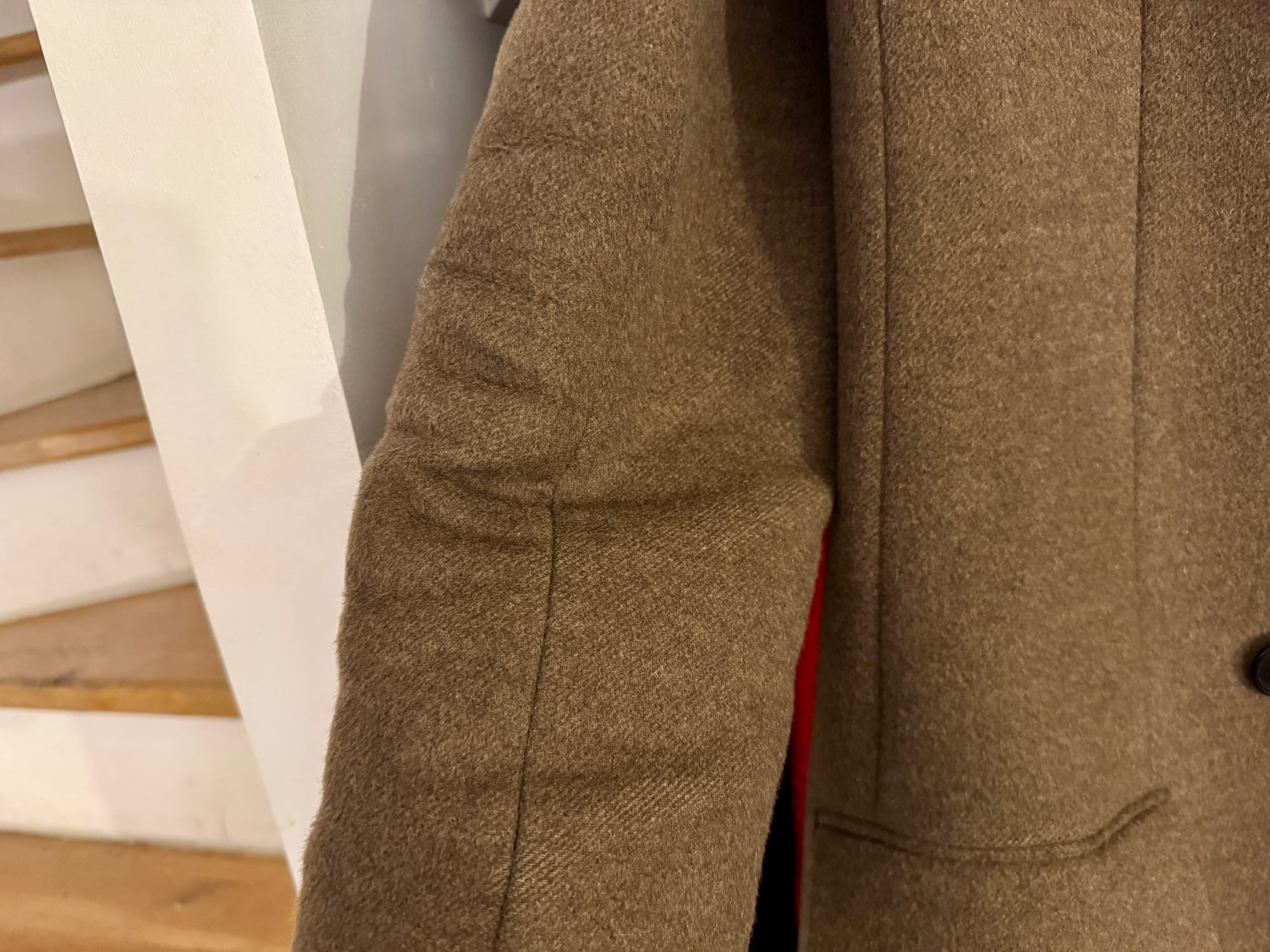
Use a cashmere comb rather than an electric fabric shaver on a coat. The comb gives you more control over pressure and area, which matters on a structured garment where you are working around seams, buttons, and lapels.
Work gently in short strokes, following the direction of the knit. Focus on high-friction areas: the sides, the cuffs, and the collar area. De-pill as needed, typically every few weeks during heavy wear season.
The initial pilling period is the worst. After the first several weeks of wear and one or two de-pilling sessions, the surface stabilizes as loose, short fibers work their way out. The coat will pill less over time.
Weather and Water
Cashmere and water have a cautious relationship. A few drops of rain will not damage your coat. A heavy downpour can.
If your coat gets lightly damp from rain or snow, shake off the surface moisture and hang it in a well-ventilated area to dry naturally. Do not use a hair dryer or radiator. Let it dry at room temperature.
If the coat gets thoroughly soaked, lay it flat on a clean, dry towel to avoid stretching from the weight of the water. Reshape it gently and let it dry completely before hanging. Once dry, the fibers may feel slightly stiff. Give the coat a gentle shake and it should recover. If it feels rough, a professional pressing or steaming will restore the surface.
For waterproofing, there are cashmere-safe water repellent sprays available. These create a light barrier that causes water to bead without affecting the feel or breathability of the fiber. Apply before the rainy season and reapply as needed. Test on an inconspicuous area first.
Steaming
A garment steamer is the best tool for refreshing and de-wrinkling a cashmere coat. Steaming relaxes fibers, removes light odors, and restores the drape without the direct contact and pressure of ironing.
Hang the coat on a sturdy hanger. Hold the steamer 3 to 4 inches from the surface (slightly further than you would for cotton or linen). Move the steamer head downward in slow, steady passes. Do not hold the steamer in one spot for too long, as concentrated steam can over-saturate the cashmere.
Let the coat hang for 15 to 20 minutes after steaming before wearing or storing. The residual moisture needs to evaporate completely.
Do not iron a cashmere coat. The direct heat and pressure of an iron can crush the fibers, create shine, and leave permanent marks. If you need a crisper finish than steaming provides, take the coat to a professional presser who uses specialized equipment for delicate fabrics.
Seasonal Storage
How you store a cashmere coat during the off-season determines whether it emerges next fall in the same condition or with moth holes, musty odor, and permanent creases.
Clean first. Always have the coat professionally cleaned before storage. Body oils, perspiration, and food residue attract moths.
Hang, do not fold. A cashmere coat should be hung on a proper hanger during storage. Folding creates creases in the heavy fabric that are difficult to remove and can stress the fiber at fold lines.
Use a breathable garment bag. Cotton canvas is ideal. Never use plastic, which traps moisture and promotes mildew.
Add cedar. Place cedar blocks in the closet near the coat. Cedar repels moths naturally. Sand the blocks lightly once a year to refresh the aromatic oils.
Choose the right location. Cool, dark, dry, and well-ventilated. A bedroom closet is ideal. Avoid attics, basements, and garages.
Check monthly. A quick visual inspection catches moth damage before it becomes catastrophic. Look for small holes, fine webbing, and tiny larvae.
Repairs
Small holes from moths or snags from jewelry can be repaired by a skilled tailor using invisible mending, a technique that reweaves matching yarn into the damaged area. For cashmere, this is worth the cost. A good invisible mend on a quality cashmere coat is virtually undetectable and extends the garment’s life by years.
Loose buttons should be re-secured promptly. A button that falls off a cashmere coat can pull fibers with it, creating a small hole at the attachment point. Check buttons at the start of each season and tighten any that feel loose.
Lining repairs are common in older cashmere coats. The outer cashmere may be in perfect condition while the lining wears through at the elbows or seams. A tailor can replace the lining entirely, giving the coat another decade of wear.
The Long View
A cashmere coat is one of the few garments that justifies the word “investment.” The cost per wear over its lifetime is remarkably low if you care for it properly. The fiber softens with age. The color deepens. The drape improves as the coat molds to your body over years of wearing.
Your part of the bargain is simple: hang it well, rest it between wears, clean it professionally once or twice a year, store it carefully, and address pilling and damage as they arise. That is the entire maintenance program for a garment that will outlast most of what you own.
Like these stories? You will (probably) love our monthly newsletter.


Member discussion